


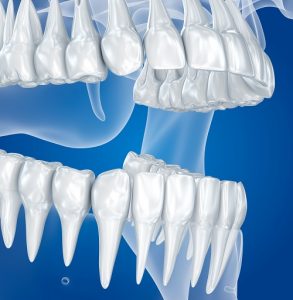
 The gum disease (the periodontium) is an increasingly prevalent affection in the modern world. In the initial phase, it causes bleeding and sore gums, unpleasant and fetid smell of the breath. Later the pain spreads to the teeth, thus giving them a degree of mobility because the device supporting the tooth in the socket (similar to a joint) becomes ill. Often we observe tooth migrations, emergence of spaces between teeth, which did not exist before. In advanced stages, the periodontal disease causes tooth loss. Depending on the severity of the disease a complex treatment is offered, which can consist in a deep cleaning under the gum of the plaque on the surface of the teeth and roots, applying a topical specific antibiotic or even surgically bysubgingival curettage of the ill tissue under the edge of the gum and around the teeth roots.
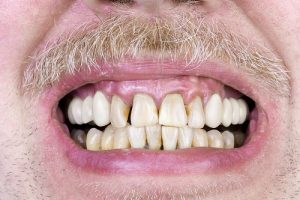 The process can be repeated at different intervals of time in order to restore the tissue physiological balanceand healing the gums but also prophylactically. The advanced, chronic and untreated periodontal disease are responsible, outside of tooth loss, for other serious diseases of the vital internal organs such as kidney, heart, liver, circulatory system. The incidence and the risk of damaging the internal organs through the permanent fuelling of bacteria in the body by the periodontal disease were confirmed long ago by researches confirmed in several research institutions in the highly renowned medicine. Therefore, the prophylaxis and treatment of this condition is first aimed to preventdamaging the vital and systemic organs and secondary to preserve the integrity of the dental arches.


